This post may contain affiliate links, view our disclosure.
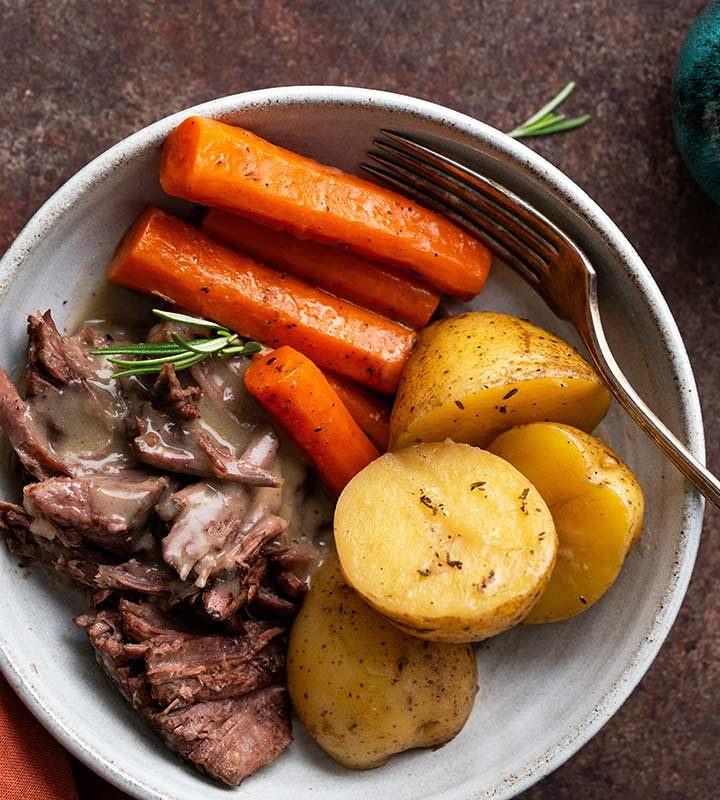
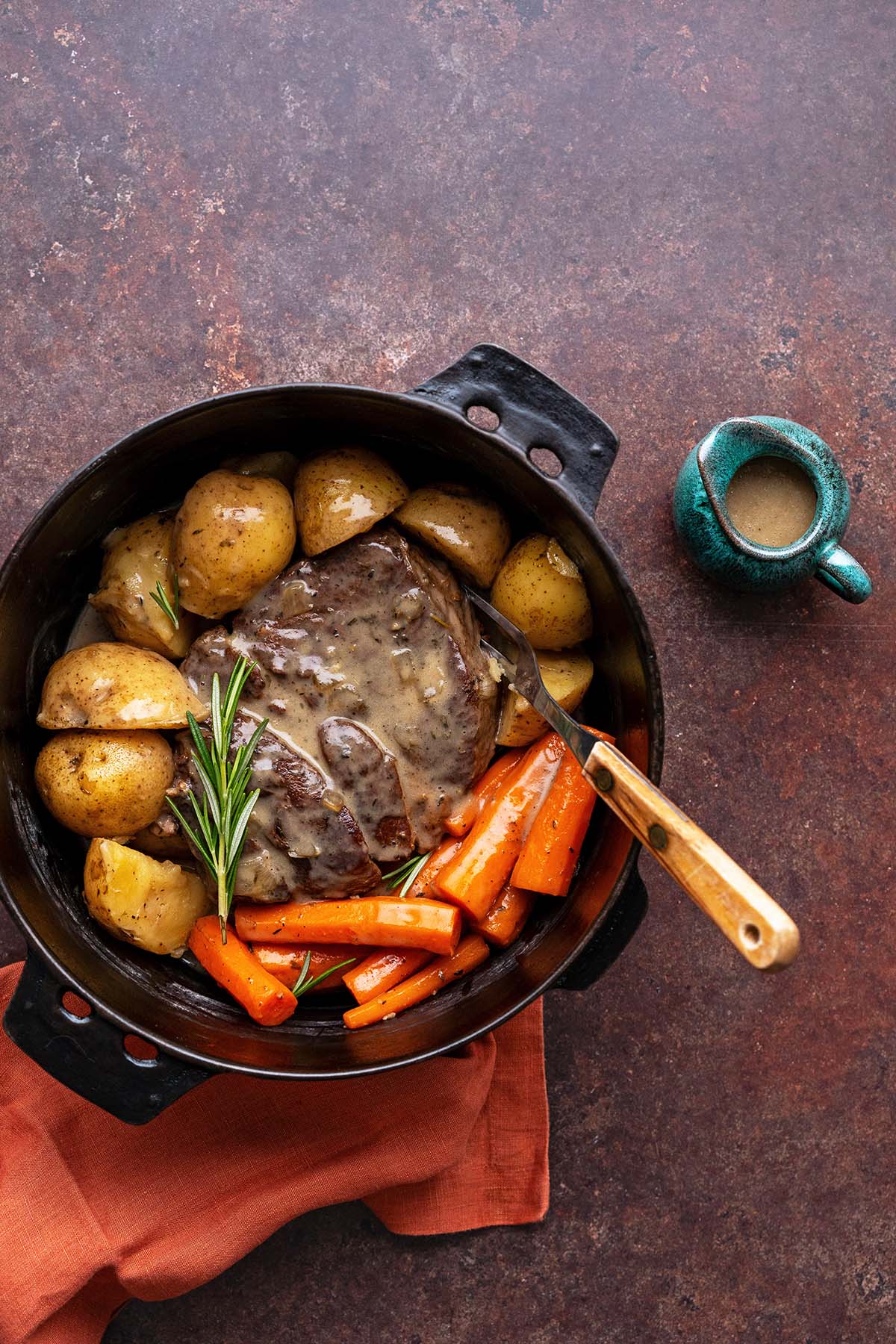
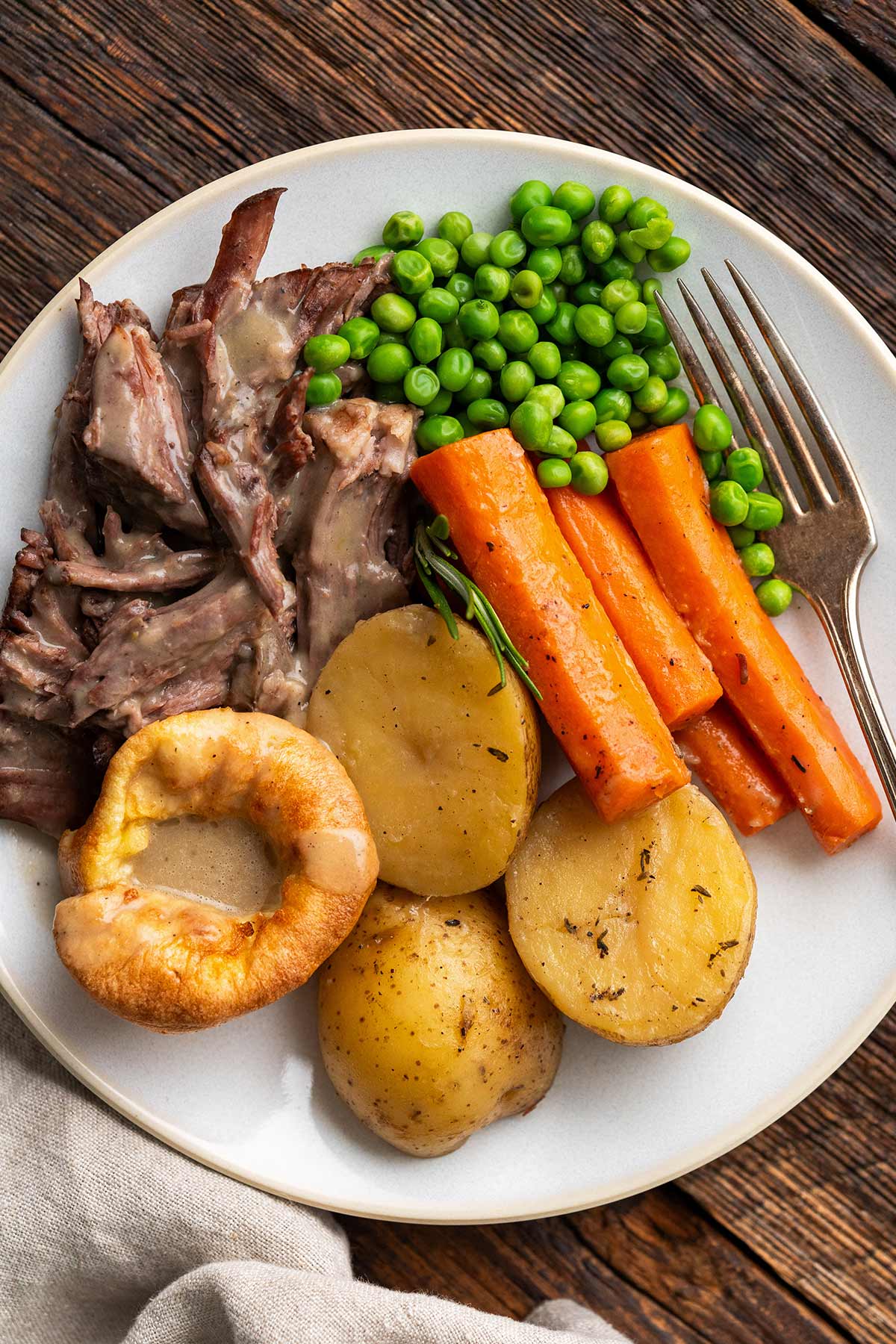
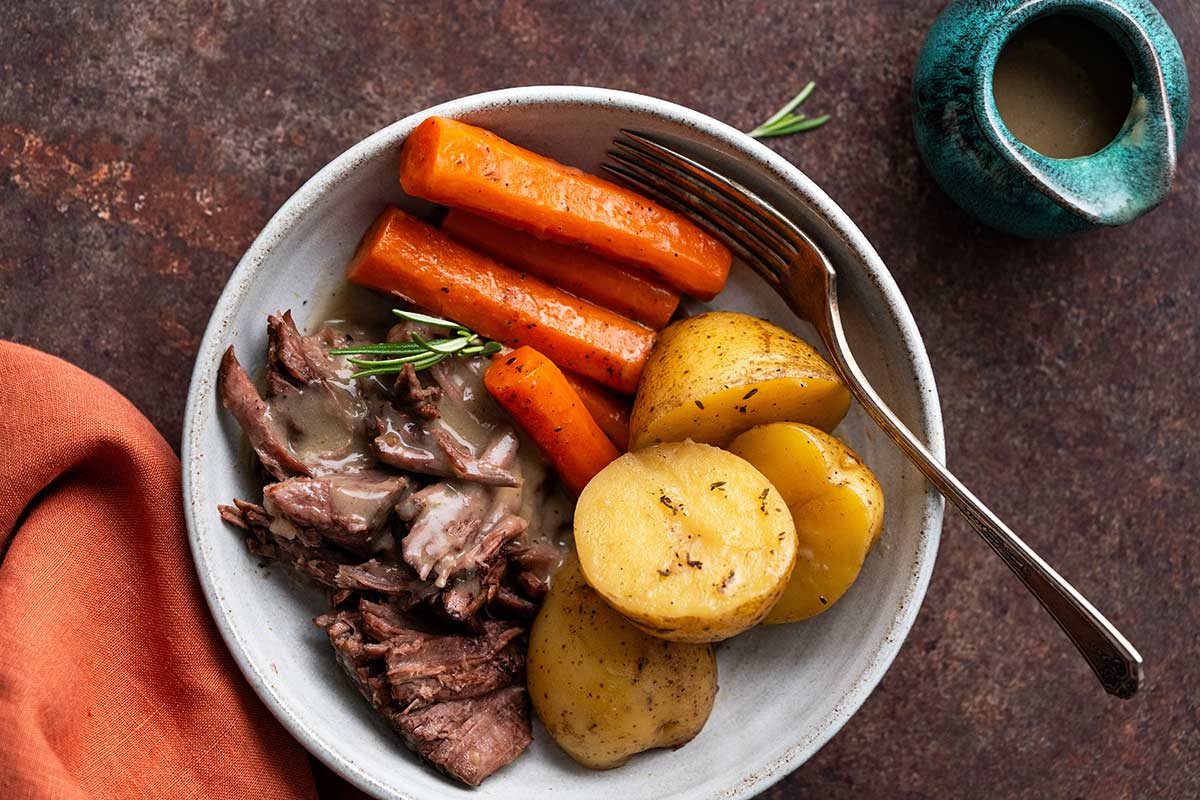
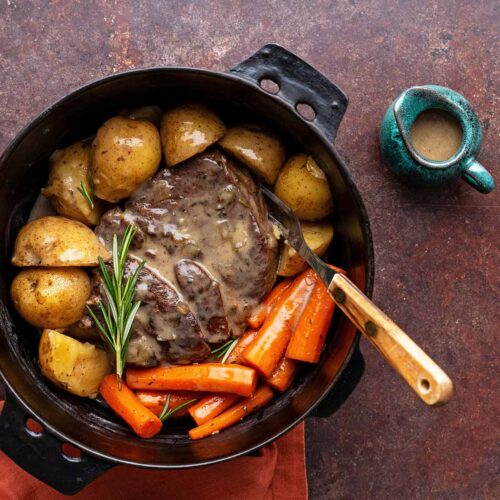
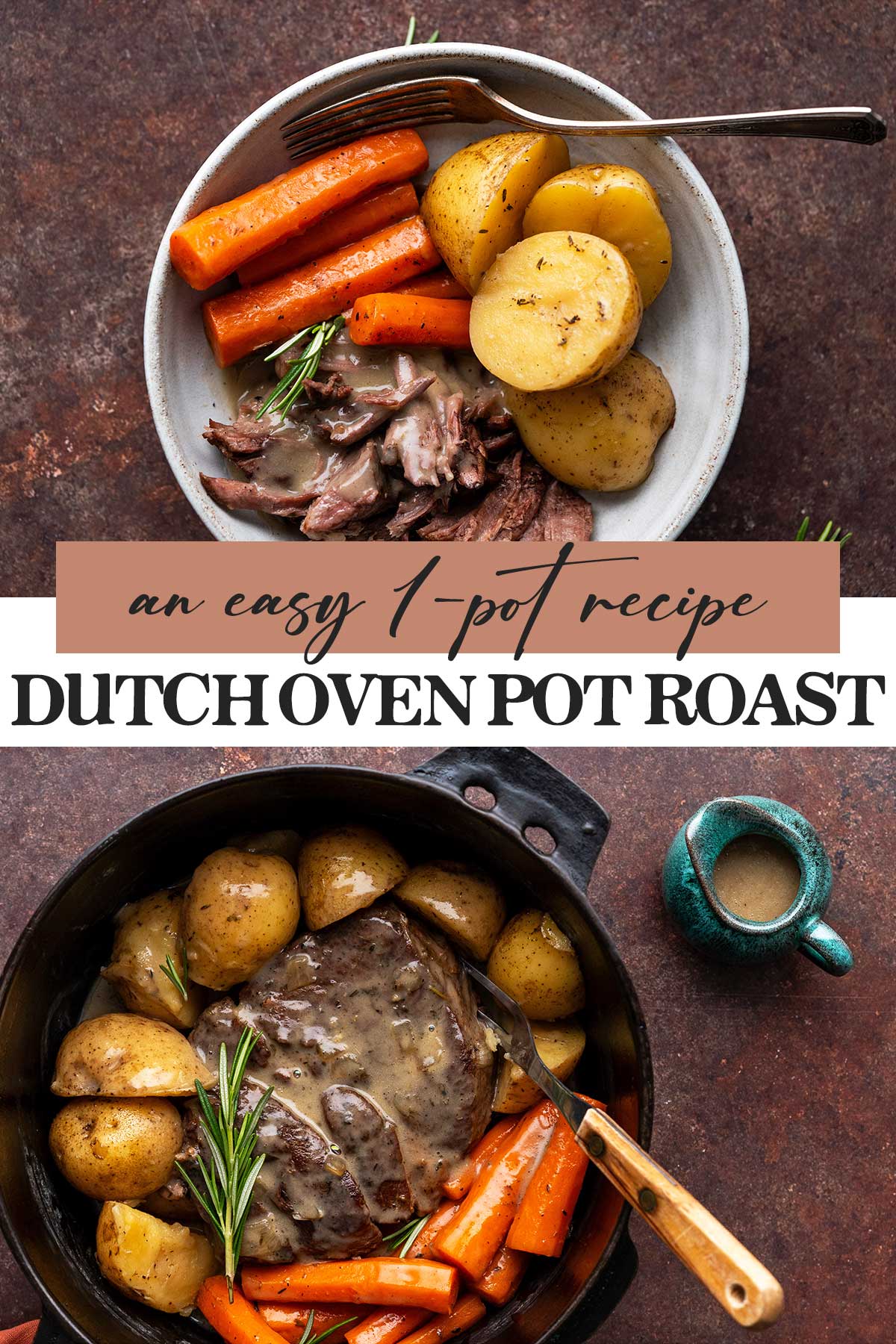
Made with beautifully marbled beef chuck roast, this easy Dutch oven pot roast recipe results in fork-tender, flavorful meat every time. We take it one step further and make it into a full one-pot meal with potatoes, carrots, and gravy all in one pot!
I can’t think of a dinner that’s more cozy, hearty, and perfect for winter than pot roast.
Funny story, as a kid my grandfather made pot roast more than anything else for family dinners during the fall and winter months. And as a result, their house always smelled like pot roast, lol! Now when I smell a roast cooking, it brings me back.
This is an easy one-pot meal: tender beef pot roast with flavorful vegetables and a savory gravy. Only requiring about 15 minutes of prep work, this meal basically cooks itself after that. It’ll give you time to cozy up with a good book or movie until dinner is ready.
A classic comfort food, pot roast is perfect for chilly Sundays at home. Or if you work from home, don’t wait until the weekend to make it!
Why You’ll Love This Recipe
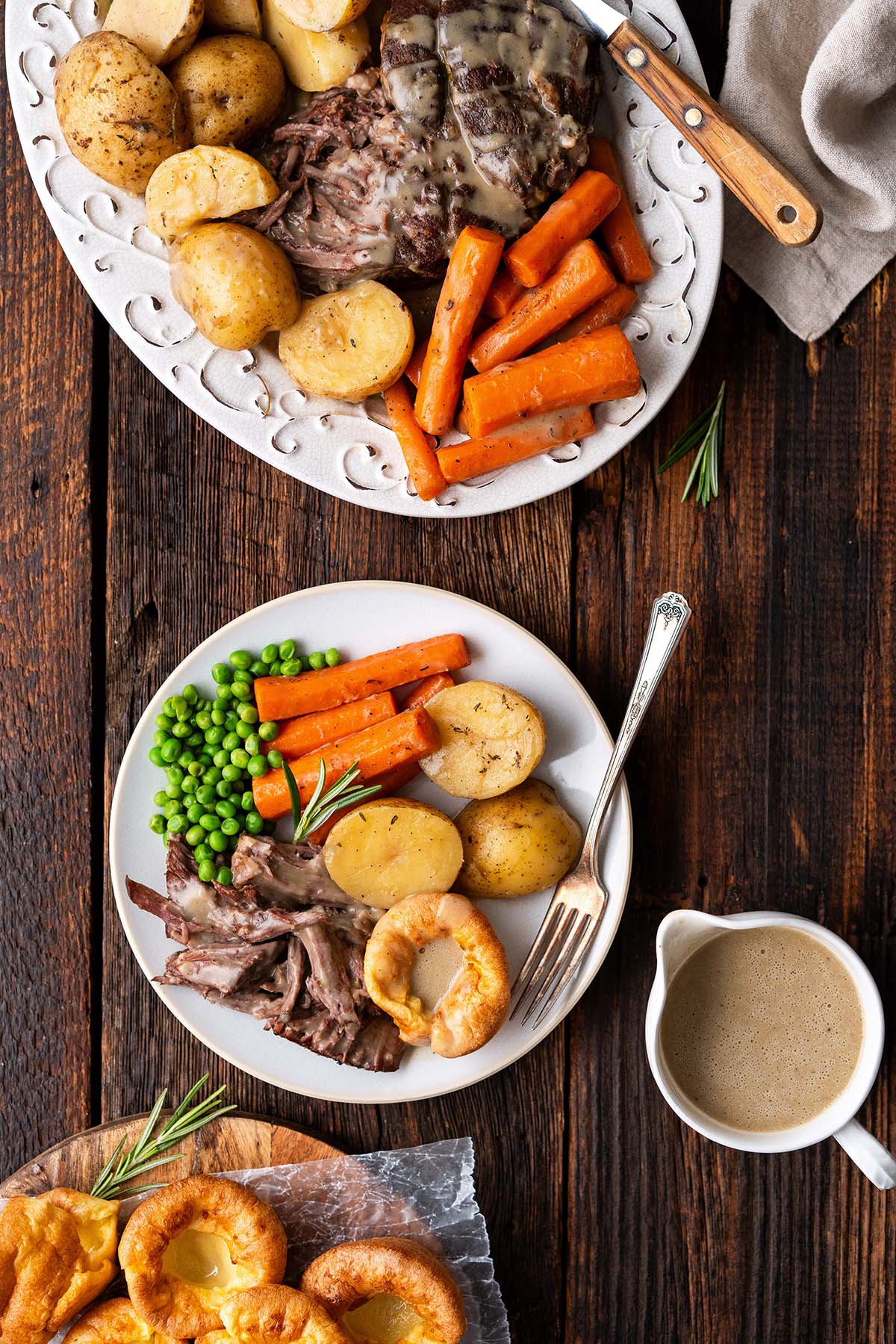
- It’s a full one pot meal. Pot roast with potatoes and carrots is a hearty, cozy, and satisfying fall and winter dinner that you don’t have to worry about other side dishes for.
- You can easily make it stretch. A 2-pound beef chuck roast will feed about 4 people (the meat shrinks quite a bit as it cooks). However, you can use a 3-pound roast in this recipe if you’re feeding 6 people or if you want leftovers. (TIP: Leftovers reheat well, so you can use this for meal prep.)
- It’s cozy. There’s nothing better than a slow cooked meal that makes the whole house smell delicious. This easy pot roast recipe is a great option for lazy Sundays at home. Or any day you have the time to let it cook low and slow!
Ingredients
Breaking It Down
Ingredients Explained
In this section I explain the ingredients and give substitution ideas where applicable. For the full recipe (including the ingredient amounts), see the recipe card below.
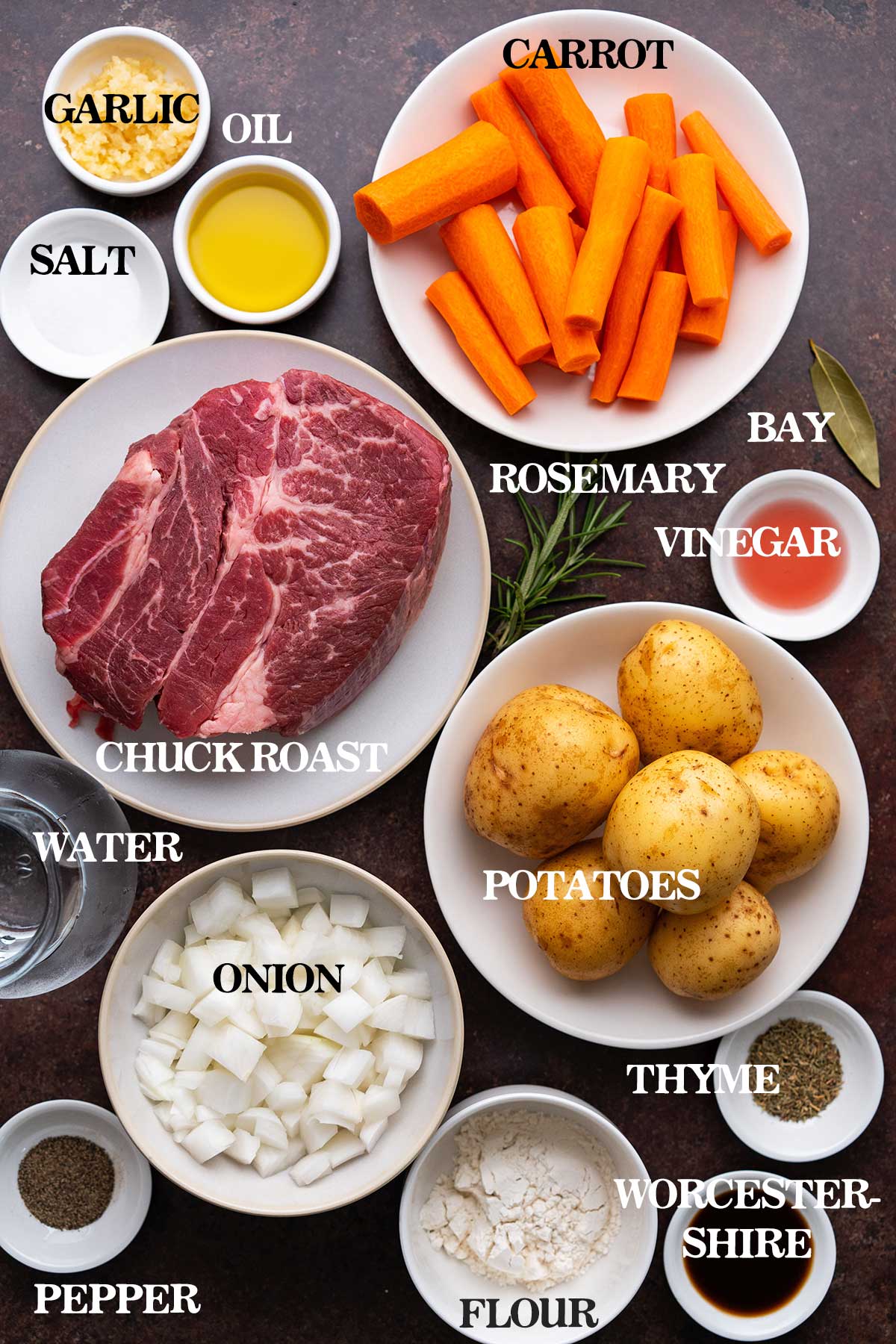
- Boneless beef chuck roast – Look for a roast with good marbling, meaning it has streaks of fat running through the muscle. As we cook the roast low and slow, the marbling keeps the meat moist and flavorful.
- Salt and black pepper – To season the meat, vegetables, and gravy.
- Olive oil – Or you can use avocado oil, ghee, beef tallow, or duck fat.
- Onion and garlic – Onion and garlic adds savory flavor and aroma, and of course bumps up the nutrition.
- Fresh rosemary and thyme – If you don’t have fresh herbs on hand, you can use about 1/2 tablespoon each of dried rosemary and thyme leaves (use less if your herbs are finely ground instead of crushed). (TIP: If you’re using dried herbs instead of fresh, gently rub the herbs between your fingers before adding to release their oils.)
- Bay leaf – A bay leaf adds complexity to the gravy, but don’t worry if you don’t have it on hand.
- Beef stock – You can also use beef broth, or water in a pinch.
- Worcestershire sauce – This fermented condiment contains a blend of spices, herbs, seasonings, and aromatics. We only need a little bit for depth of flavor and savory, umami notes.
- Yellow potatoes – In this recipe, I prefer yellow potatoes instead of starchy potatoes like Russet because yellow potatoes hold up well to braising. Red potatoes are another good option here because they also hold up well.
- Carrots – Carrot is a classic ingredient in a Yankee pot roast meal.
- Flour – Here we mix flour with cold water to form a slurry to thicken the gravy. For gluten free gravy, you can use cornstarch mixed with water to form a cornstarch slurry.
- Red wine vinegar – Just a splash of red wine vinegar added at the end wakes up the flavor of this slow-cooked meal.
Instructions
Step 1: How to Make Beef Chuck Roast Pot Roast in a Dutch Oven
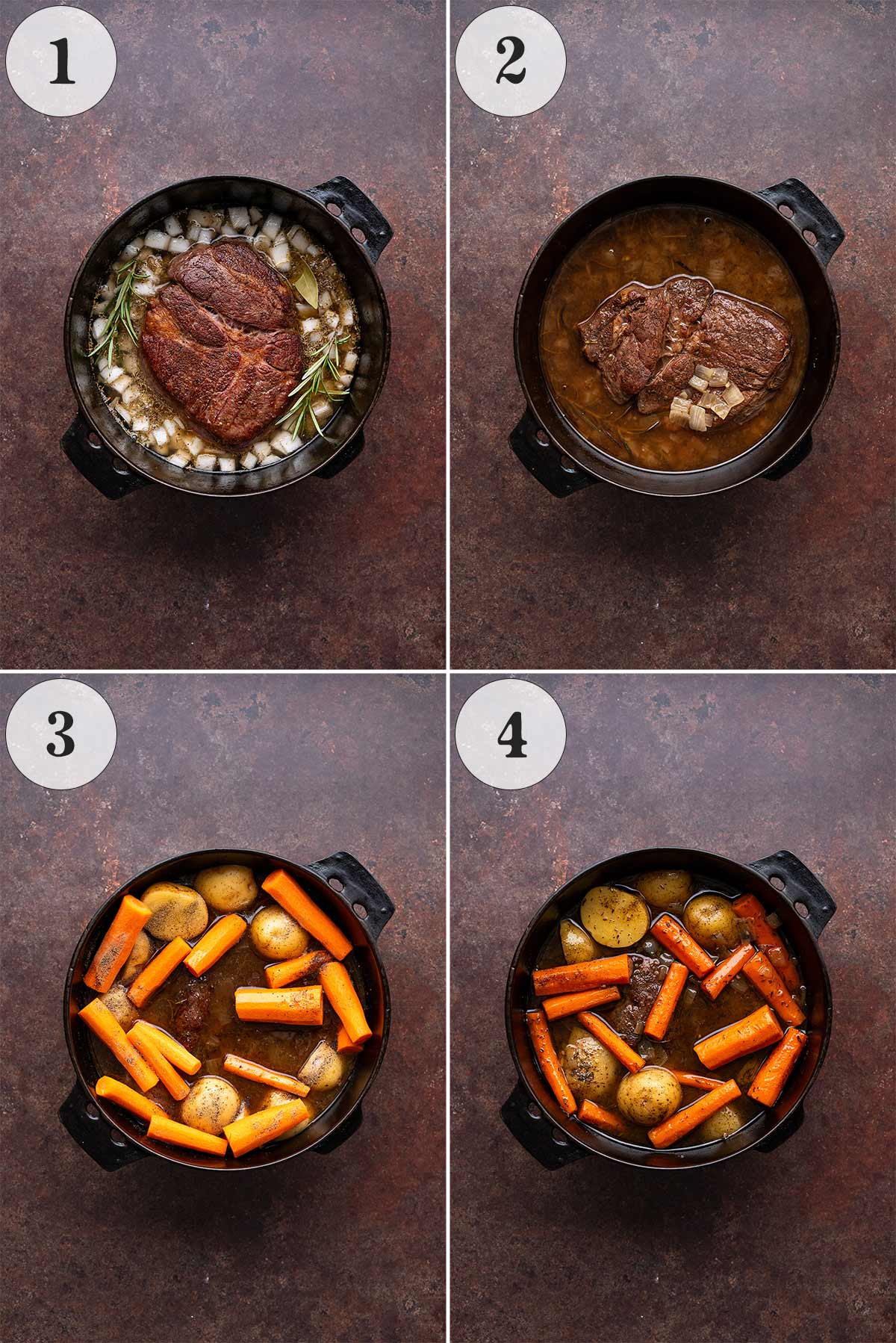
- Season, sear, and add the liquid. Season the roast on both sides with 1 1/2 teaspoons salt + 1/2 teaspoon black pepper. Add the oil to a 5 to 6-quart Dutch oven over high heat. Once the oil is shimmering hot, add the roast and sear for about 2 to 4 minutes per side, flipping once. Remove from the heat. Add the onion, garlic, rosemary springs, thyme springs, and bay leaf around the outside of the roast. Add the beef stock and Worcestershire.
- First cook time. Cover the Dutch oven and cook at 325F for 1 1/2 hours if your roast is between 2 to 2 1/2 pounds. Alternatively, cook for 2 hours if your roast is between 2 1/2 to 3 pounds.
- Add the vegetables. Add the potatoes, carrots, and the remaining 1/2 teaspoon salt + 1/4 teaspoon black pepper.
- Second cook time. Return to the oven and cook (covered) until the meat and vegetables are tender, about 1 hour, 15 minutes more.
Step 2: How to Make Gravy From Pot Roast Drippings Using a Cornstarch or Flour Slurry
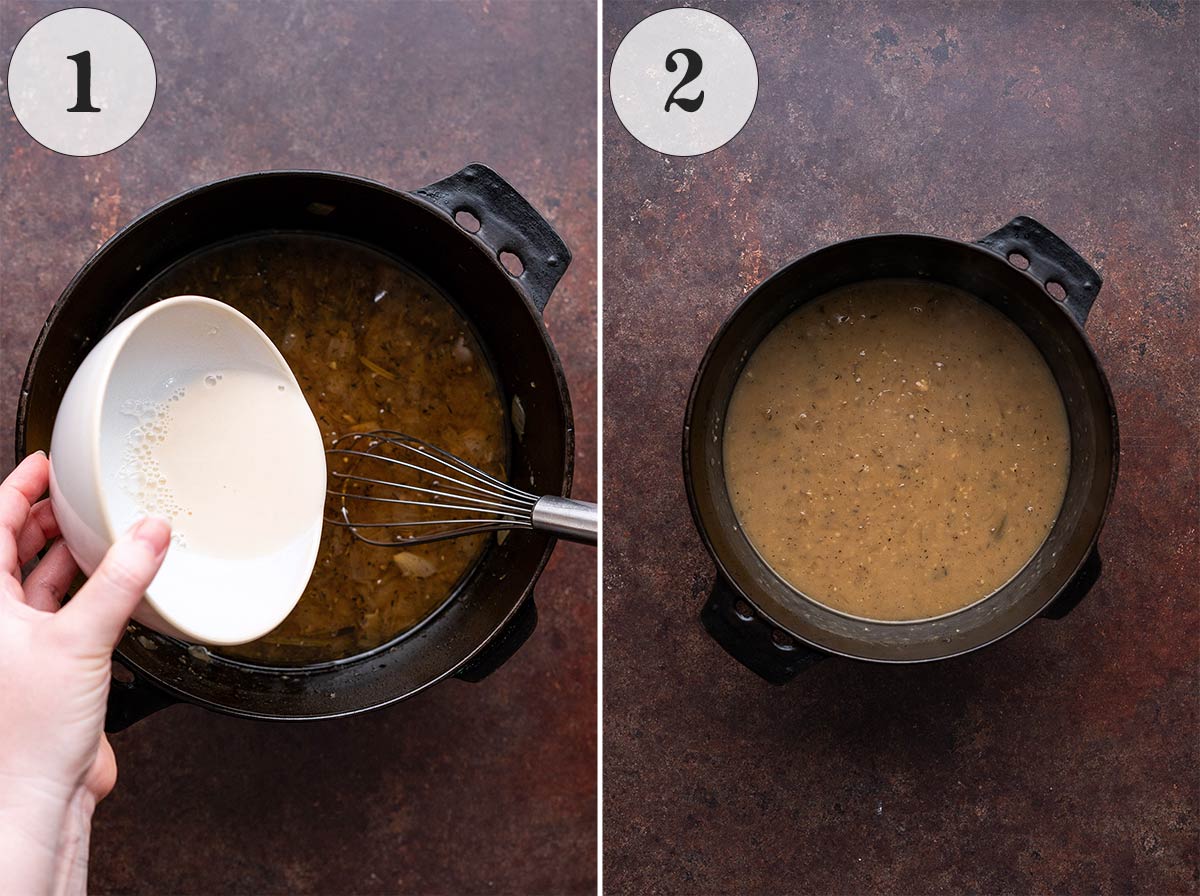
- Remove the potatoes, carrots, and meat from the Dutch oven, leaving the cooking liquid and drippings in the pot. Put the Dutch oven on the stovetop over medium heat. Gradually whisk in the flour (or cornstarch) slurry. Continue to whisk until the gravy thickens and comes to a boil, about 3 minutes. Whisk in the vinegar and remove from the heat.
- The gravy should look like this. Serve the meat and vegetables with the gravy to drizzle on top. (TIP: If you like a very thick gravy, use a slurry made with up to 1/2 cup of flour + 1 cup water OR 6 tablespoons of cornstarch + 3/4 cup of water. If you do this, I recommend adding the slurry a little at a time until the gravy achieves your desired thickness instead of adding the slurry all at once.)
Storage
Cool to room temperature, and then store leftovers in an airtight container in the fridge for up to 4 days or in the freezer for up to 3 months. (TIP: Before putting leftovers away, I like to toss the meat with a little bit of gravy to coat it in addition to drizzling some on top, which helps prevent it from drying out.)
Tips For the Best Pot Roast Recipe
- For smooth, lump-free gravy, strain the cooking liquid and drippings before adding the slurry to thicken it.
- You can thicken the gravy with cornstarch instead of flour for a gluten-free version. To do so, mix 3 tablespoons of cornstarch with 6 tablespoons of cold water to form a slurry. Follow the same method to make the gravy with the cornstarch slurry. (IMPORTANT: If keeping this gluten free is important, make sure to check the label of your Worcestershire sauce and beef stock to verify that they are gluten free.)
- This recipe makes about 3 cups of gravy, so you’ll likely have extra. Don’t throw it away, there are a ton of delicious ways to use leftover beef gravy! Instead of au jus, use beef gravy to make beef on weck sandwiches. Or use it to simplify ground beef pot pie. Or serve it on top of stuffing meatloaf, mashed potatoes, biscuits, or Yorkshire pudding.
How to Make Sure Your Pot Roast in the Oven is Tender
There are three factors that help ensure your pot roast is fork tender and juicy every time:
- Start with a roast that a has good marbling. Look for streaks or flecks of fat running through the meat when you’re selecting your roast. (Side Note: It’s a fine line. I look for good marbling, but avoid cuts that have thick globs of fat in them.)
- Use enough liquid. When you braise meat (which is the cooking method we’re using here), you need enough liquid to come about halfway up the roast. If necessary, you can add more liquid when you add the vegetables. There should always be enough liquid to come about halfway up the meat.
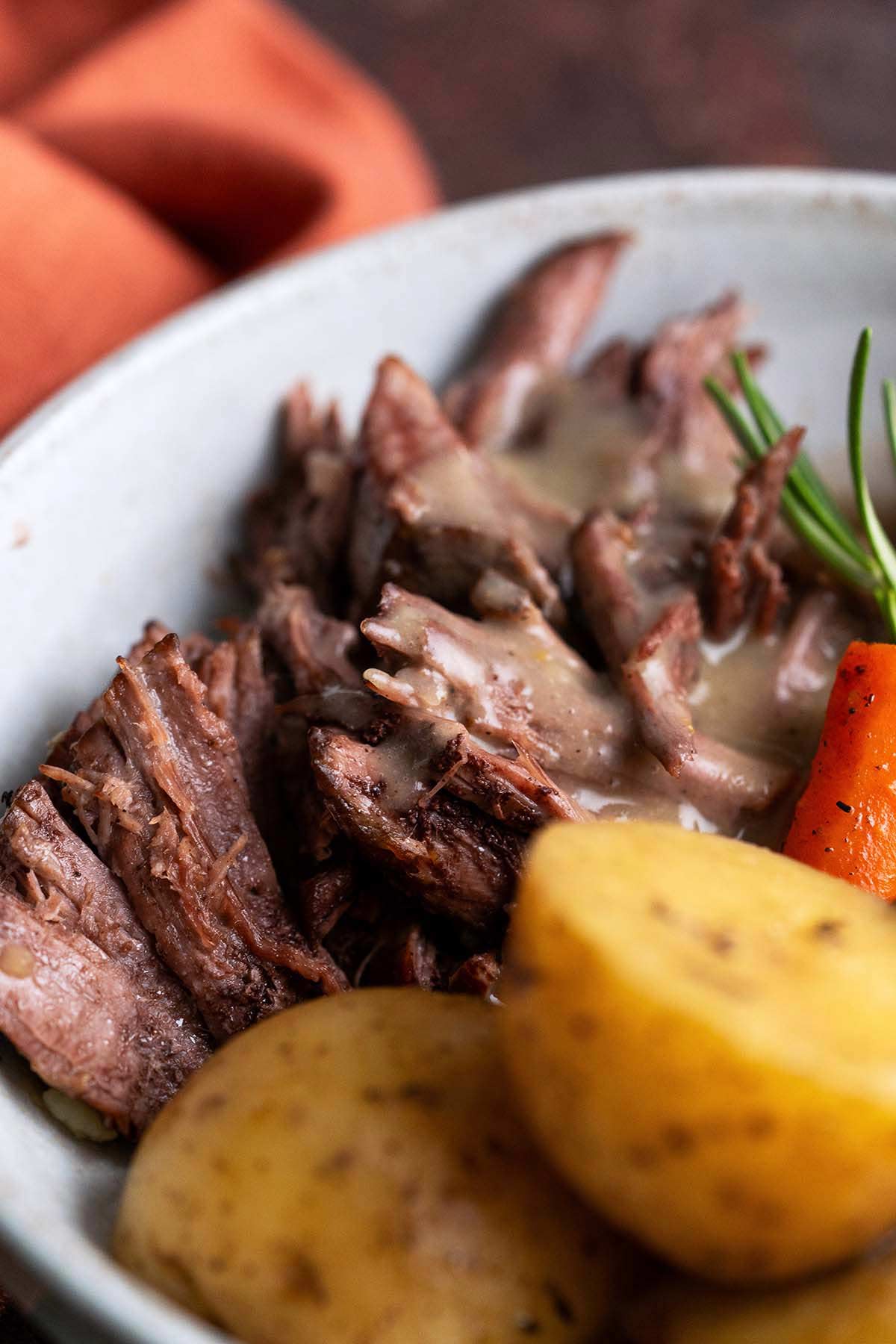
- Cook it low and slow. The best way to cook a roast is on a low heat for a longer period. When you have a tougher cut of meat, braising (i.e., cooking it low and slow with liquid) allows tough connective tissue and collagen to break down into melt-in-your-mouth tender meat.
Is Pot Roast Better in a Crockpot or Dutch Oven?
In terms of flavorful and tender meat, you can use either a slow cooker or Dutch oven for an amazing roast! Both a Dutch oven and Crockpot seal in liquid and moisture as the meat braises and tenderizes. However, each cooking method comes with its own set of pros and cons to consider.
Cleanup
If you want minimal cleanup, a Dutch oven might be a better bet.
Traditionally, if you wanted to sear meat when using a slow cooker, the meat needed to be seared on the stovetop in a separate pan. Of course this adds another step, results in another dish to clean, and means you have to wipe the splatter grease off the stovetop. However, many slow cookers now have a sauté function built in (this slow cooker with a sauté function is on my wish list). If your Crockpot is like mine and doesn’t have this function, a Dutch oven is less cleanup.
If You Need to Leave the House During Cooking
For a meal that you can prep in the morning and then forget for 8 to 10 hours while you’re out of the house, cooking in a Crockpot is a better option.
Making a roast in a Dutch oven in the oven requires minimal hands-on prep. However, you need to be home while it cooks, so it’s not a great option if you have to leave the house.
Think About How Much Time You Have
Another thing to consider is the timing so that whatever cooking method you choose works with your schedule.
If you’re using a Crockpot, I find that a chuck roast or other pot roast comes out the most tender and juicy if you cook it on LOW for 8 to 10 hours (instead of on high for a shorter period of time). So you really do need a full day to let it cook! On the other hand, it only takes around 3 hours to cook pot roast to tender perfection in a Dutch oven. And it comes out fall-apart tender and flavorful every time.
Compared to an 8 to 10-hour cook time, a 3-hour cook time is a good thing if you need to get a meal on the table faster. But if you’ll be out of the house and you have all day to let the roast cook on its own, then a Crockpot might be a better bet. (If you want to compare recipes, take a look at my Crockpot pot roast recipe.)
Frequently Asked Questions
A pot roast isn’t a specific cut of meat. Instead, it’s a roast that’s cooked using a certain method (i.e., braising, which means the meat is cooked low and slow with liquid, such as broth, water, wine, etc.).
Tough cuts of meat (such as chuck roast, beef brisket, and bottom round roast) are good for pot roast. They become fork-tender and melt in your mouth when cooked. My favorite cut of meat for pot roast is beef chuck because it has a good amount of connective tissue and marbling. This not only adds a ton of flavor, but also makes sure the meat is fall-apart tender after braising.
In general, you cook pot roast in a Dutch oven for about 45 minutes at 350F for every one pound of meat. Or if you prefer a lower cooking temperature, about 1 hour at 325F for every one pound of meat. So if your roast is two pounds and you’re cooking it at 350F, you’ll need around an hour and a half.
We’re cooking this pot roast at 325F, so we follow the 1 hour per 1 pound rule. I find that this slightly lower temperature results in the best pot roast that’s fall-apart tender. This method is a bit more forgiving; it’s harder to dry out meat when you cook at a lower temperature!
Also, because we’re making a Yankee pot roast (which is just a pot roast that’s cooked with root vegetables, such as potato, carrot, and/or turnip), don’t forget that the vegetables are added a little bit later. We typically add the vegetables when the roast has about 1 hour, 15 minutes left to cook.
More Cozy Beef Dinners to Try
Dutch Oven Pot Roast Recipe
Yields: 4 servings
This easy Dutch oven pot roast recipe results in fork-tender, flavorful meat every time. We take it one step further and make it into a Yankee pot roast – a full meal with potatoes, carrots, and gravy!
Email This Recipe
Get this recipe link emailed straight to your inbox!
Prevent your screen from going dark
-
Prep. Preheat the oven to 325F.
-
Sear. Season the roast on both sides with 1 1/2 teaspoons salt + 1/2 teaspoon black pepper. Add the oil to a 5 to 6-quart Dutch oven over high heat. Once the oil is shimmering hot, add the roast and sear for about 2 to 4 minutes per side, flipping once. Remove from the heat.
-
Add the aromatics and liquid. Add the onion, garlic, rosemary springs, thyme springs, and bay leaf around the outside of the roast. Add the beef stock and Worcestershire.
-
Cooking period 1. Cover the Dutch oven and cook for 1 1/2 hours if your roast is between 2 to 2 1/2 pounds, or cook for 2 hours if your roast is between 2 1/2 to 3 pounds.
-
Cooking period 2. Add the potatoes, carrots, and the remaining 1/2 teaspoon salt + 1/4 teaspoon black pepper. Return to the oven and cook (covered) until the meat and vegetables are tender, about 1 hour, 15 minutes more.
-
Make the gravy. Remove the potatoes, carrots, and meat from the Dutch oven, leaving the cooking liquid and drippings in the pot. Put the Dutch oven on the stovetop over medium heat. Gradually whisk in the flour (or cornstarch) slurry, continuing to whisk until the gravy thickens and comes to a boil, about 3 minutes. (TIP: If you like a very thick gravy, use a slurry made with up to 1/2 cup of flour + 1 cup water OR 6 tablespoons of cornstarch + 3/4 cup of water. If you do this, I recommend adding the slurry a little at a time until the gravy achieves your desired thickness instead of adding the slurry all at once.) Whisk in the vinegar and remove from the heat.
-
Enjoy. Serve the meat and vegetables with the gravy to drizzle on top.
- How to Use Cornstarch Instead of Flour (Gluten Free Version): Mix 3 tablespoons of cornstarch with 6 tablespoons of cold water to form a slurry. Follow the same method to make the gravy with the cornstarch slurry. (IMPORTANT: If keeping this gluten free is important, make sure to check the label of your Worcestershire sauce and beef stock to verify that they are gluten free.)
- Gravy Yield: This makes about 3 cups of gravy, so you will likely have extra.
- Storage: Cool to room temperature, and then store leftovers in an airtight container in the fridge for up to 4 days or in the freezer for up to 3 months. (TIP: Before putting leftovers away, I like to toss the meat with a little bit of gravy to coat it in addition to drizzling some on top, which helps prevent it from drying out.)
Calories: 715kcal | Carbohydrates: 53g | Protein: 52g | Fat: 34g | Saturated Fat: 13g | Polyunsaturated Fat: 3g | Monounsaturated Fat: 18g | Trans Fat: 2g | Cholesterol: 156mg | Sodium: 1730mg | Potassium: 2169mg | Fiber: 8g | Sugar: 9g | Vitamin A: 19035IU | Vitamin C: 46mg | Calcium: 134mg | Iron: 8mg
Nutritional information is automatically calculated and should be used as an approximate.
This post was first published on An Edible Mosaic on January 8, 2024 and updated on March 9, 2026.


I’m the writer, recipe developer, photographer, and food stylist behind this blog. I love finding the human connection through something we all do every day: eat! Food is a common ground that we can all relate to, and our tables tell a story. It’s my goal to inspire you to get in the kitchen, try something new, and find a favorite you didn’t know you had.
Free Bonus
10 Appetizer Recipes From Around The World