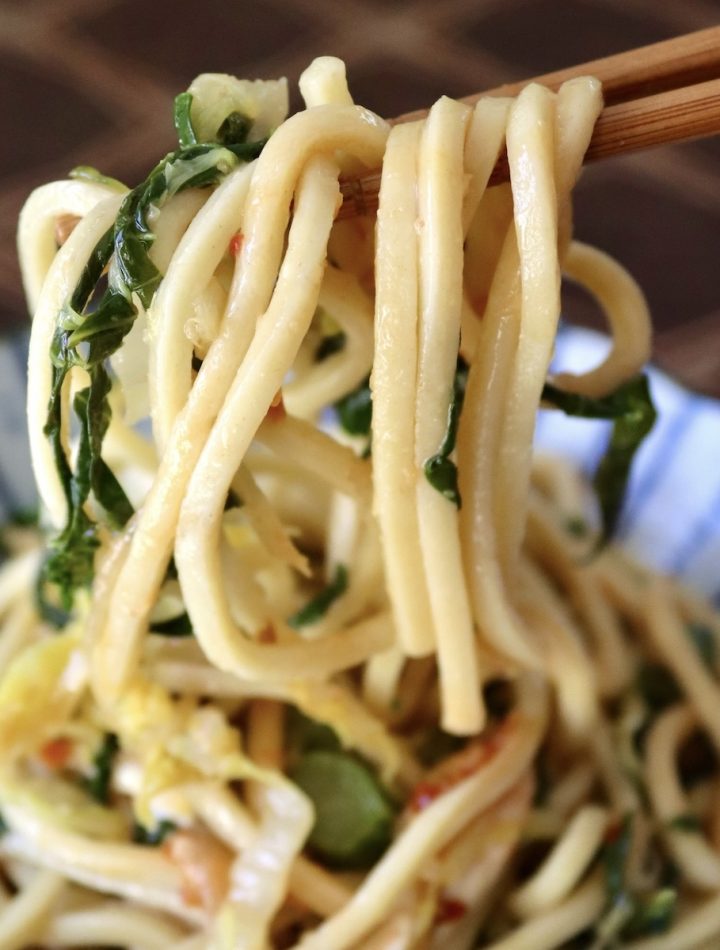
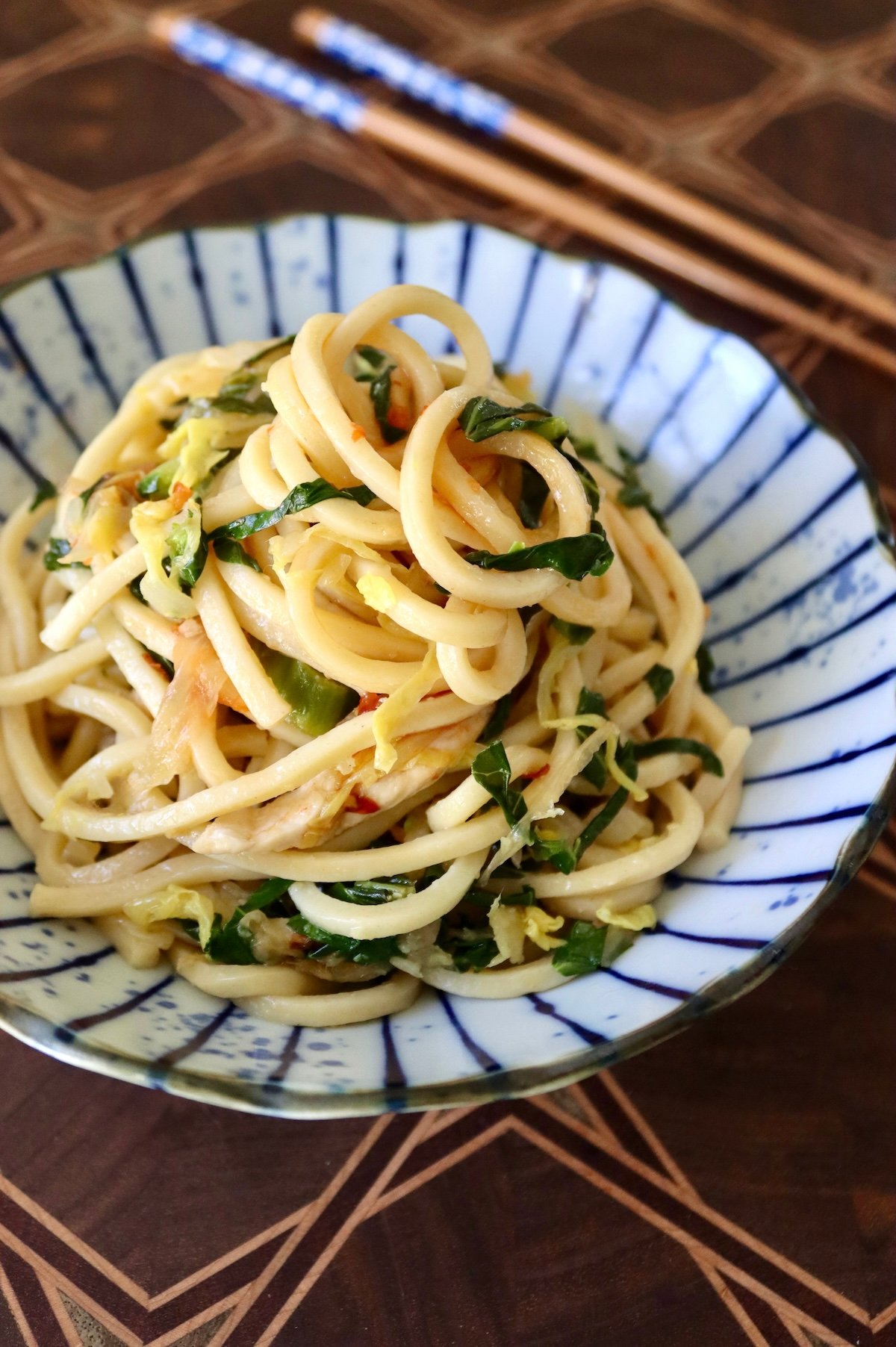
This Chinese Longevity Noodles the recipe is spiced with Asian flavors and full of chicken and healthy greens. It is a comfort food designed for the Lunar New Year, which can be enjoyed throughout the year.
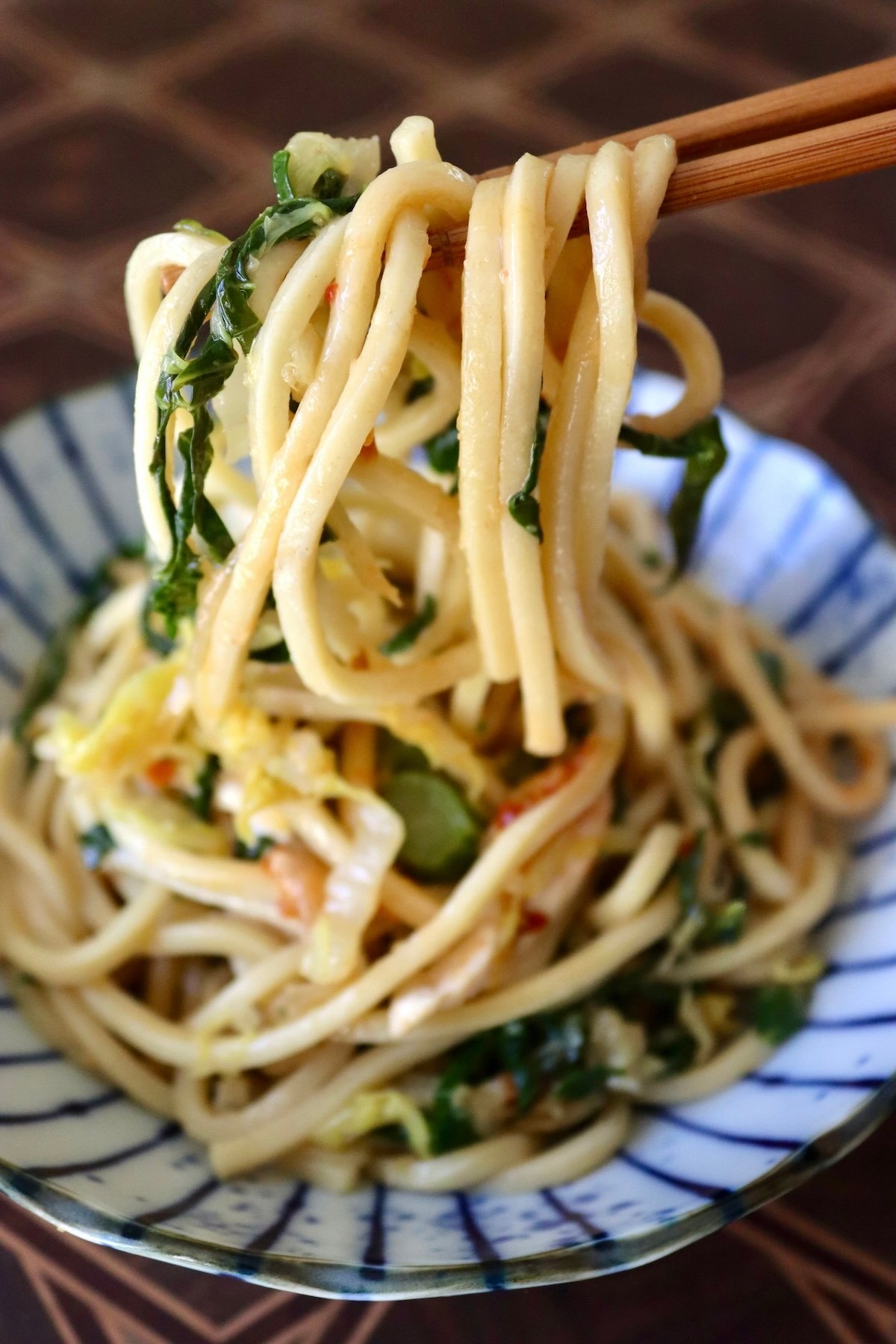
Disclosure: I don’t consider myself an expert on Chinese New Year or Chinese cuisine – below is some basic information about it that I’ve learned through my interest in food.
This Lunar New Year dish is everything! It’s easy to make, it’s spicy, it’s light, it’s hearty, it’s nutritious, it’s so comforting, and it can only bring you more happiness and a longer life.
Obviously, this is a low risk-high reward-recipe!
This Chinese Longevity Noodles recipe is absolutely unforgettable – whether you’re celebrating the Lunar New Year or not.
Ingredient Notes
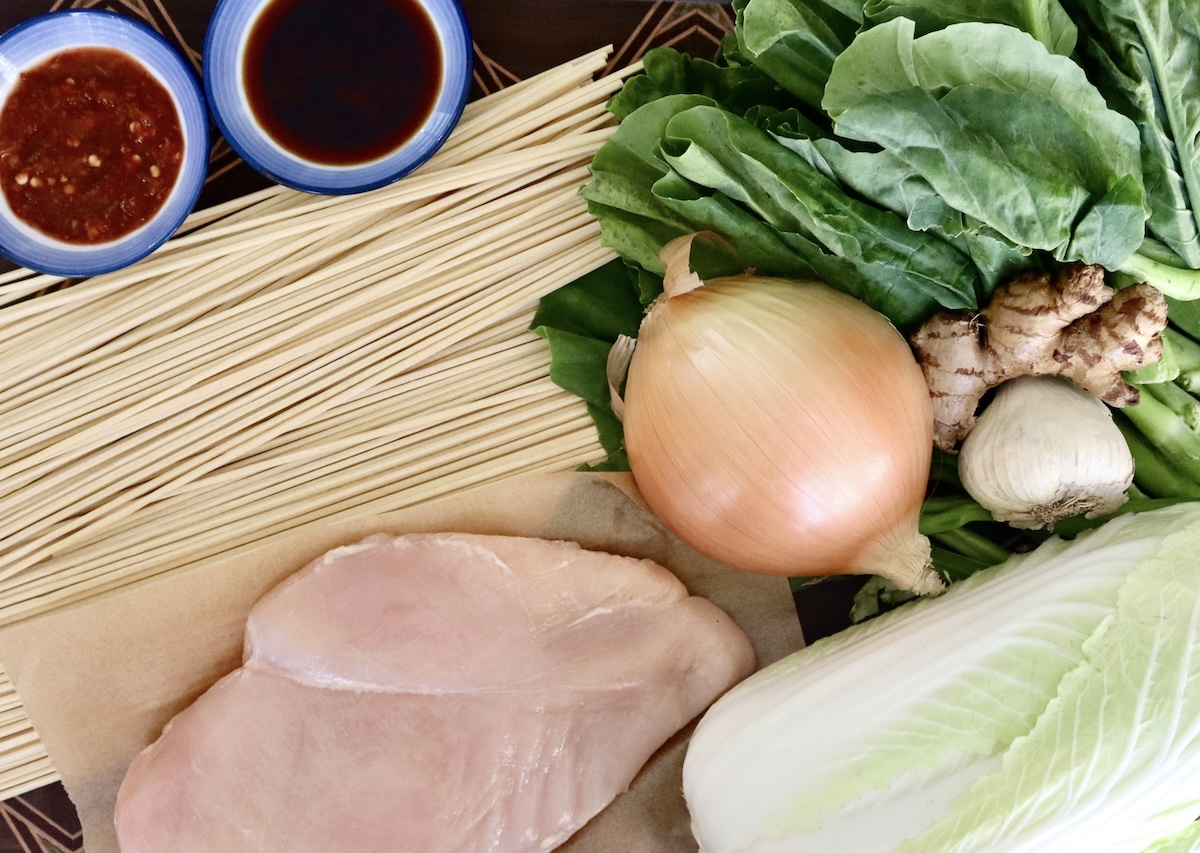
- Chinese Longevity noodles. You can use fresh or dry noodles in this recipe. I use dry. You can find it in Chinese grocery stores, which are also online. If you can’t find them, even if it’s not traditional, just use the longest noodles you can find. 🙂 More about Longevity noodles below.
- onions – Always choose onions that are heavy for their size.
- ginger root – The roots of fresh ginger should be strong and also feel heavy due to their size.
- fresh garlic – Look for strong heads of garlic without soft spots or green leaves, which indicate that they are old. (For advice: if there is they are green shoots in your garlic cloves, cut them in half, lengthwise, and remove the green root with the tip of a knife. The rest of the cover should still be good.)
- Napa cabbage (Chinese Cabbage) – Napa cabbage is mild, slightly sweet, with soft, soft green leaves with white ribs. Revenge Green cabbage.
- Gai Lan – Gai Lan is Chinese Kale, and it is commonly called Chinese broccoli. The green leaves of Gai Lan are packed with nutrients and become soft, like spinach, when cooked. You can find it in most Asian markets and in some large grocery stores. Revenge: Spinach.
- chicken – I use chicken breasts. If you want you can use dark meat (chicken thighs). Either way, fresh raw chicken should be soft pink with white pieces of fat, slightly fragrant, soft and tender.
- neutral oil – Avocado oil or vegetable oil are both good choices.
- chili paste – I use Sambal Oelek. A nice touch of heat with chewy noodles and hearty veggies. Revenge Crushed red pepper (use ⅓ the amount.)
- I am willow or Tamar – Use low-sodium soy sauce or Tamari if possible.
What are Longevity Noodles?
- Chinese Longevity Noodles, or long noodles, are eaten throughout China, and are often stir-fried.
- These noodles are never cut or broken by the cook, and if they can be eaten without biting through the string, they are considered very good.
- Longevity Noodles is a version of Yi Mein, which is a Cantonese egg noodle made with wheat flour and soda water, which makes it slightly chewy.
How to make it
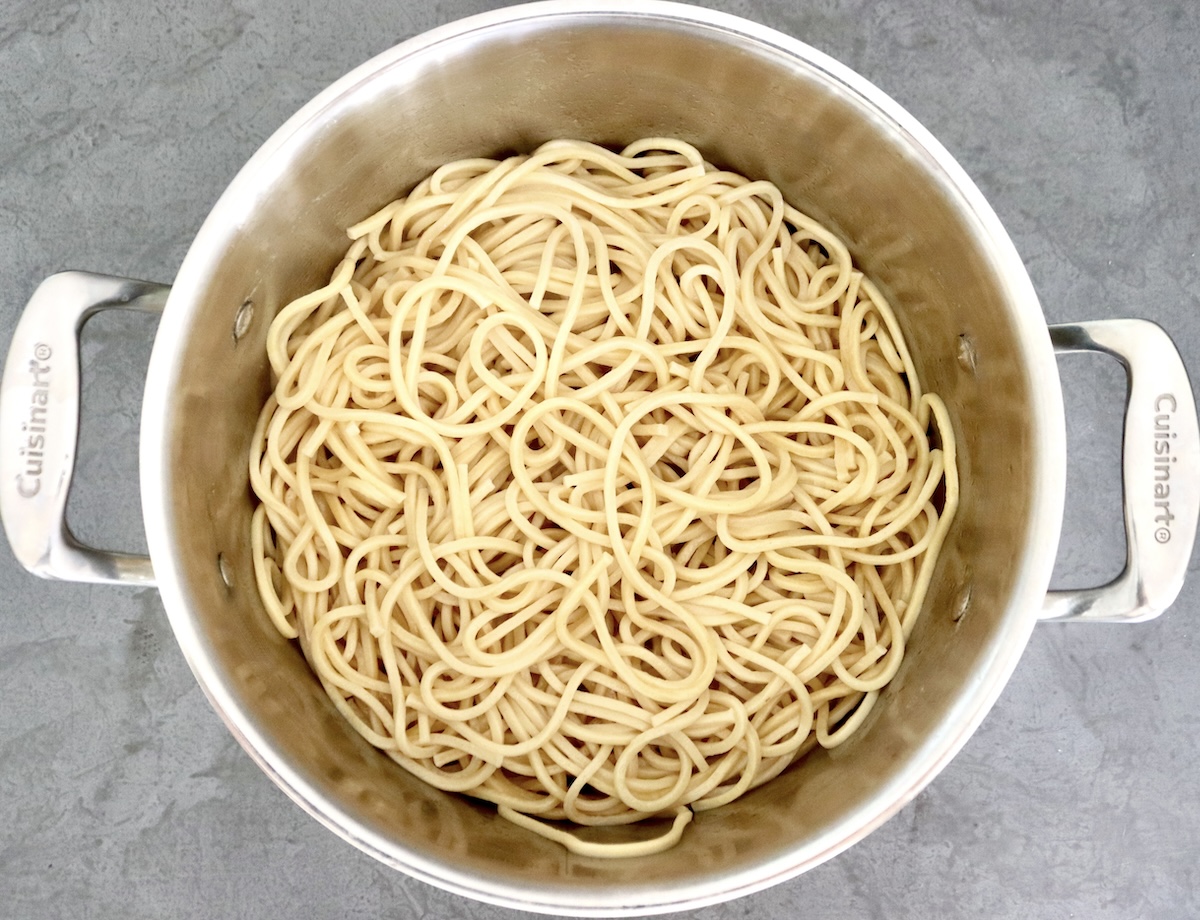
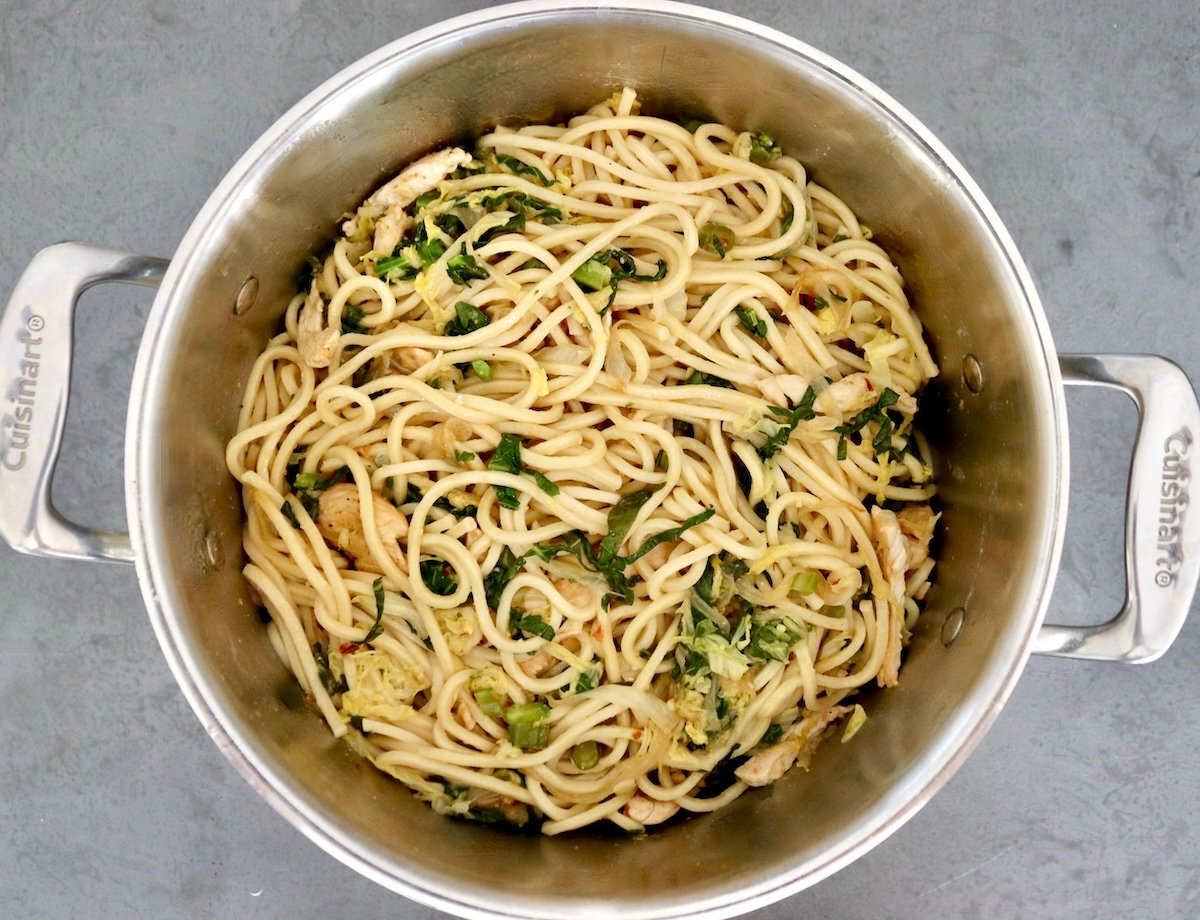
– Bring a large pot of water to the boil and add the dry noodles. Immediately stir with a fork to make sure they don’t stick together. Let them cook until soft, about 9 minutes (or according to package instructions). Remove, return to the pot, and toss with a spoonful of oil. Set aside.
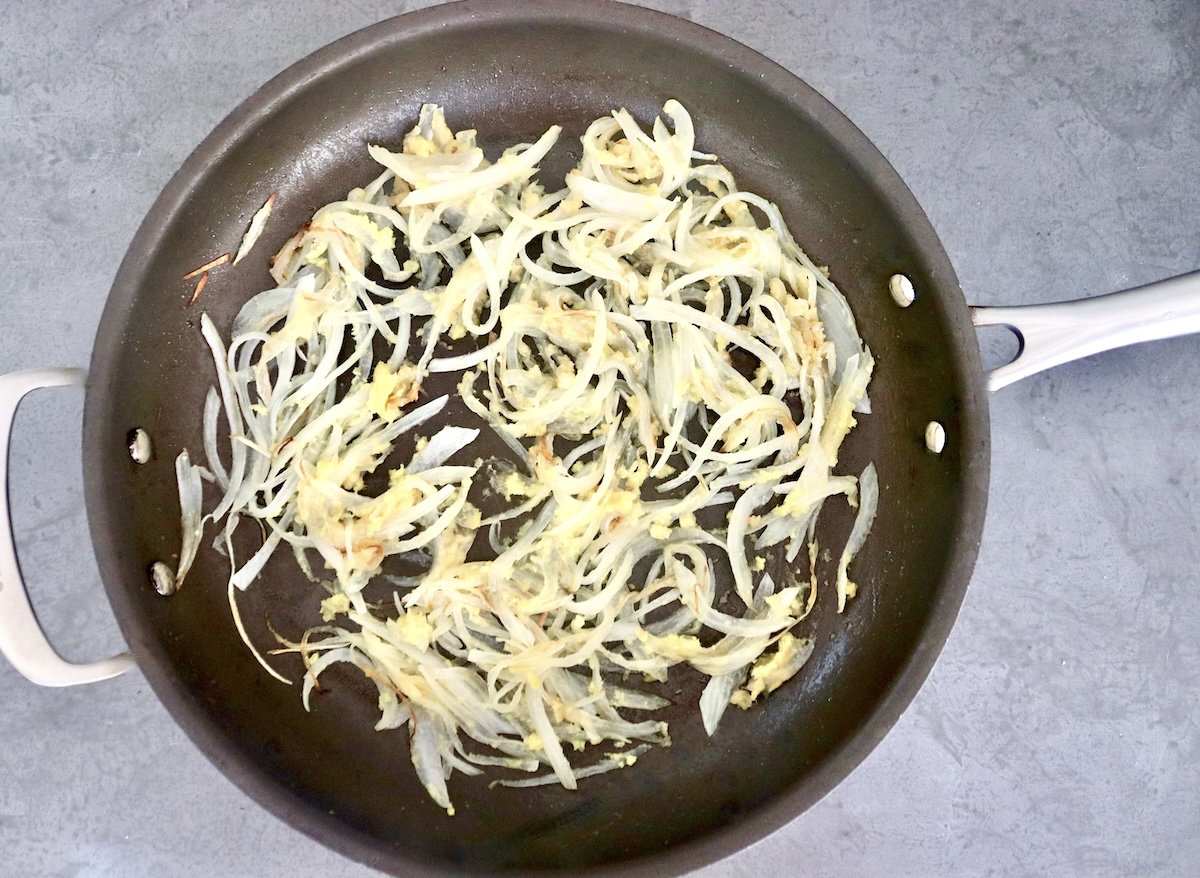
– Coat the bottom of a large pan with two tablespoons of oil, and place it over the heat. Add onion, garlic and ginger. Cook, stirring occasionally, until the onion is soft, about 7 minutes.
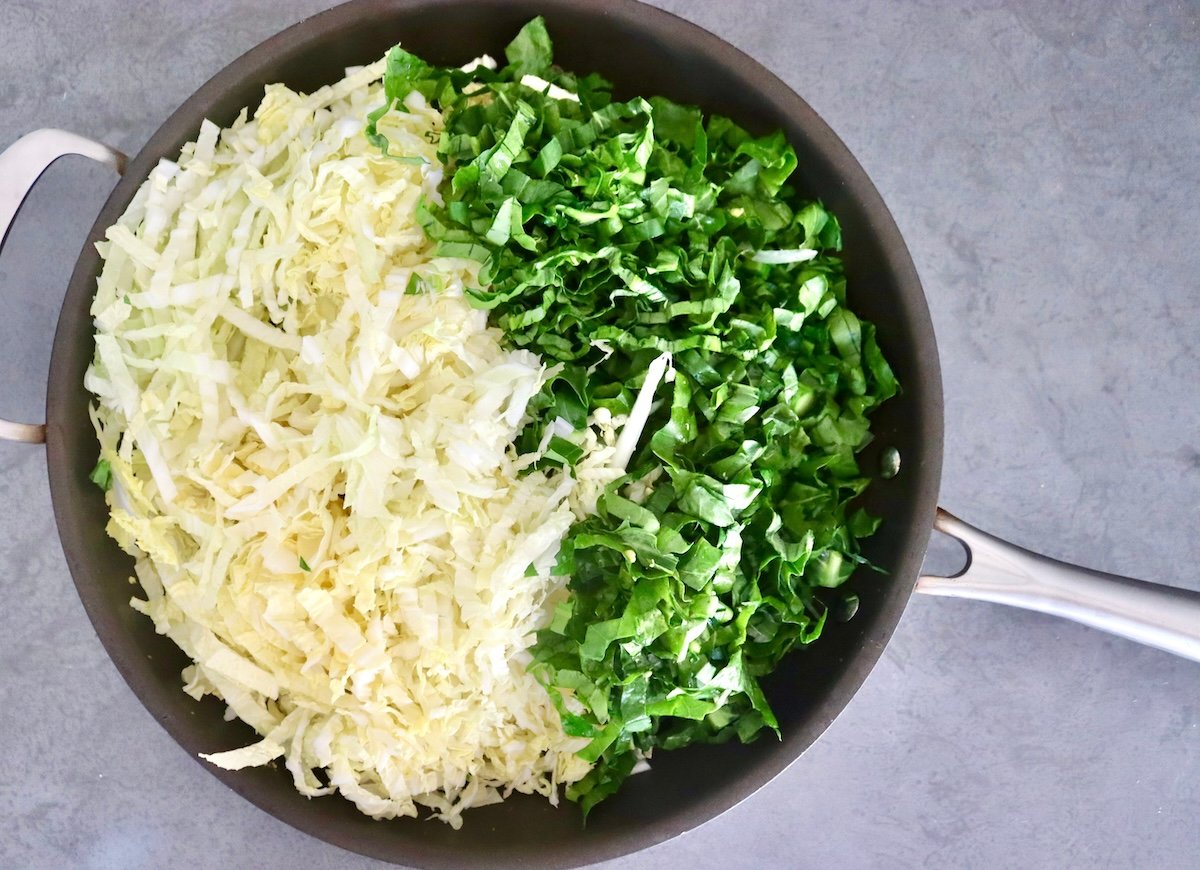
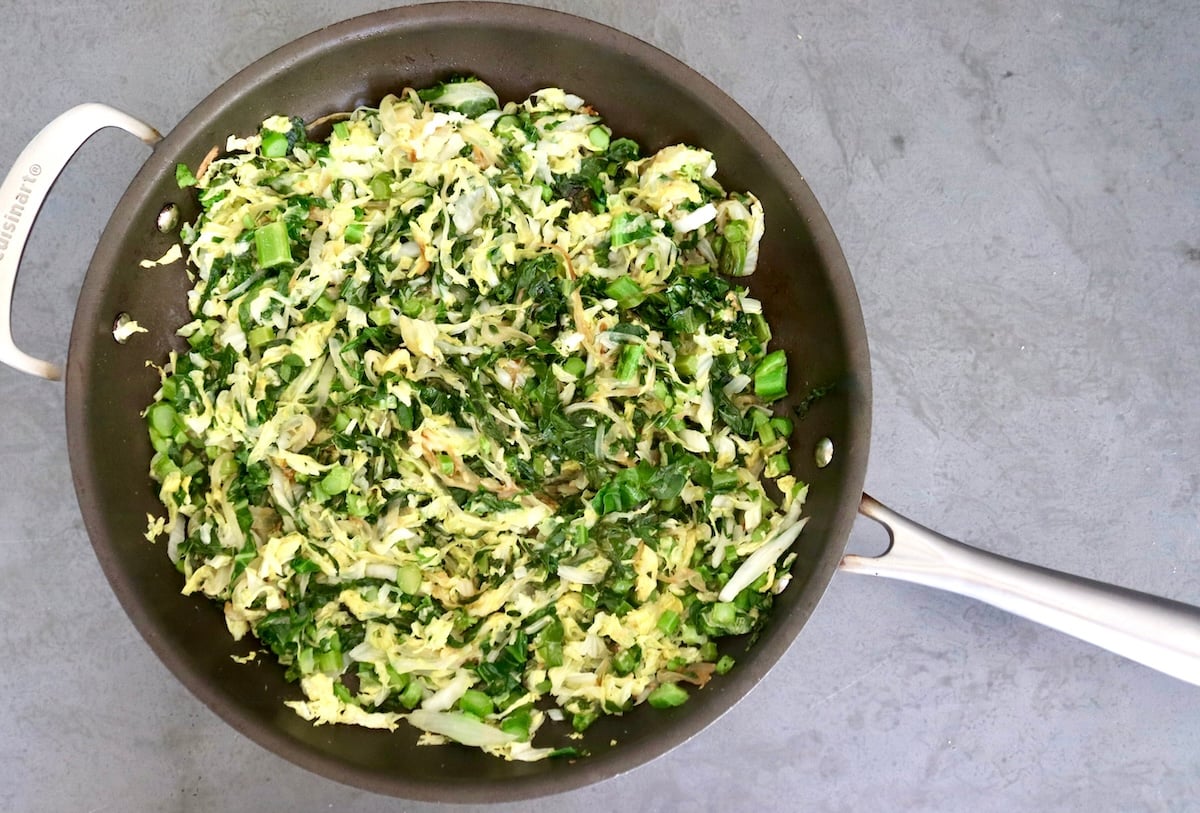
– Add the Gai Lan and cabbage and stir with kitchen tongs. Cook until all the greens are completely done, about 5 minutes. Then put them in the pot with the noodles. Don’t clean the skillet!
– In a small bowl, use a small whisk or fork to mix the chili paste with the soy sauce (or Tamari) and the remaining oil. Pour about ¾ of this into the pot with the noodles and veggies, and the rest into the skillet. Heat to medium, add chicken, season with salt and pepper. Stirring occasionally, cook until tender, about 5 minutes.
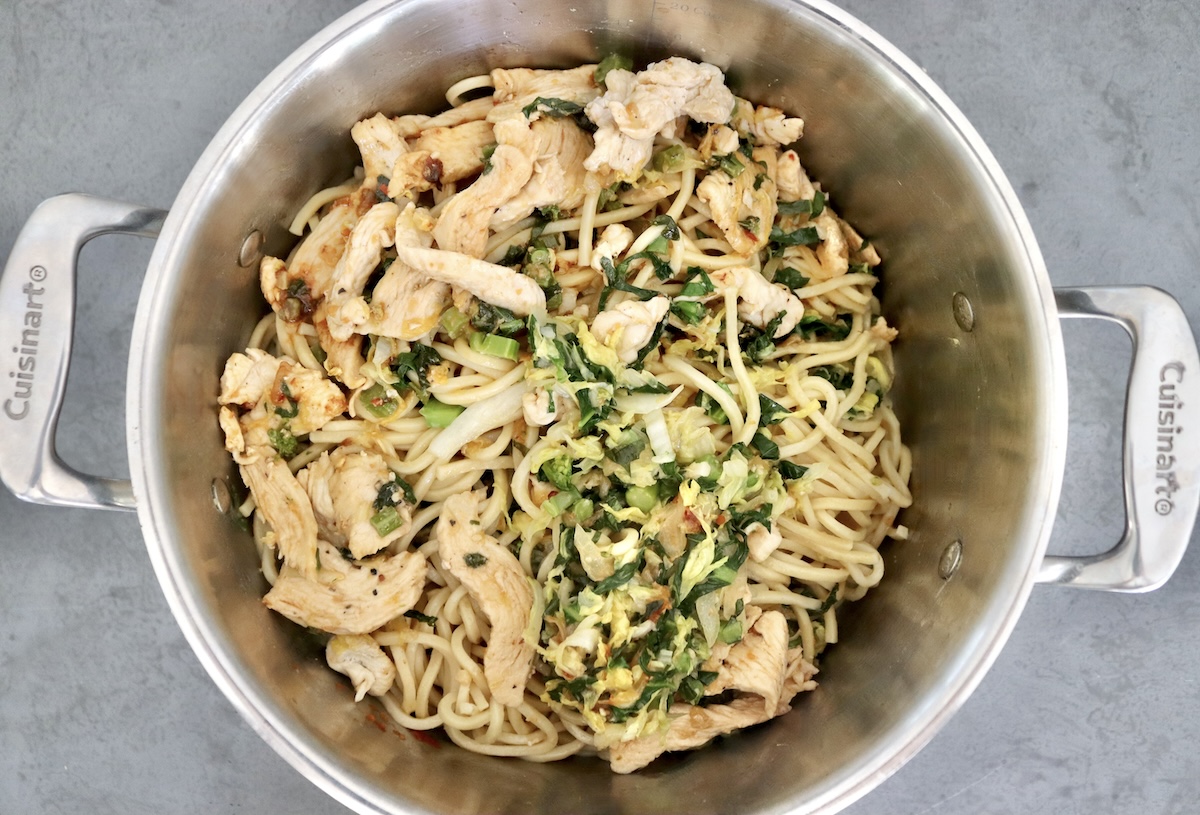
– Now add the cooked chicken to everything in the pot and mix gently to combine evenly. Taste carefully with salt and pepper if needed. Serve!
Variations
- Mild version vs. more spicy. Feel free to use more or less chili paste to suit your taste. (For a group of people, I usually use less and serve with crushed red pepper on the side so everyone can add more if they want.)
- Gluten-free version. These brown rice ramen noodles would be another great way to make this recipe gluten-free. And a few different brands make gluten-free soy sauce.
- Other proteins. This noodle dish is delicious with shrimp, steak and tofu. And if you have time and want to throw it up (or 10!), leave the chicken out of the cooking, and make this delicious fall-apart chicken recipe the day before, and add it when you mix in the vegetables.
- Some vegetables. Spinach, bok choy, broccoli, shredded carrots, shiitake mushrooms, bean sprouts, broad beans, edamame, peas and red peppers would all be delicious in this recipe.
- For a rich version. Exchange three tablespoons of oil for three tablespoons of melted unsalted butter. (It should be added at the end with chili paste and soy sauce.)
Moving Forward
Most noodle dishes are best the day they are made. However, if stored in the refrigerator in an airtight container, this should keep well for four days. To reheat, add a little water to loosen the noodles.
What is Chinese New Year?
- Chinese New Year, also known as Lunar New Year, is a Chinese festival that marks the beginning of a new year.
- It begins on the second new moon after the winter solstice and ends on the full moon 15 days later.
- The celebration usually involves spending time with family and friends, giving gifts, fireworks, and of course… a special meal.
Seven Lucky Foods for Chinese New Year
There are seven foods that are said to be lucky to eat during Chinese New Year: fish, dumplings, spring rolls, sweet rice balls, citrus fruit, rice cakes, and longevity noodles – the star of this recipe.
I hope you enjoy this comforting and delicious noodle dish every time you decide to make it!
Chinese Longevity Noodles Recipe
This Chinese Longevity Noodles recipe is seasoned with Asian flavors and full of healthy chicken and vegetables. Food is healthy and comforts the heart.
Ingredients
- 1 (1-pound) bag dry Chinese noodles
- 6 spoons neutral oil, separation
- 1¾ cup thin yellow onion
- 1½ spoons ginger pulp
- 1½ a spoon garlic, minced
- 5 cups Napa Cabbage, washed and dried, slightly chopped
- 5 cups Gai Lan, washed and dried, slightly chopped
- ¾ pound boneless chicken breasts cut into thin bite-size pieces
- 2 spoons chili paste
- 1 a spoon low-sodium soy sauce or Tamari
- salt and freshly ground black pepper
Instructions
-
Prepare the noodles. Bring a large pot of water to the boil and add the dry noodles. Immediately stir with a fork to make sure they don’t stick together. Let them cook until soft, about 9 minutes (or according to package instructions). Remove, return to the pot, and toss with a spoonful of oil. Set aside.
-
Cook the vegetables. Coat the bottom of a large pan with two tablespoons of oil, and place it over the heat. Add onion, garlic and ginger. Cook, stirring occasionally, until the onion is soft, about 7 minutes. Add the Gai Lan and cabbage and stir with kitchen tongs. Cook until all the greens are completely done, about 5 minutes. Then put them in the pot with the noodles. Don’t clean the skillet!
-
Make the sauce and cook the chicken. In a small bowl, use a small whisk or fork to mix the chili paste with the soy sauce (or Tamari) and the remaining oil. Pour about ¾ of this into the pot with the noodles and veggies, and the rest into the skillet. Heat to medium, add chicken, season with salt and pepper. Stirring occasionally, cook until tender, about 5 minutes.
-
Mix everything and season. Now add the cooked chicken to everything in the pot and mix gently to combine evenly. Taste carefully with salt and pepper if desired. Serve!
TIPS
Nutritional information is calculated automatically, so it should only be used as an estimate.
FOOD IS BUILDING
Calories: 298kcal | Carbohydrates: 25g | Proteins: 13g | Oil: 16g | Saturated Fat: 3g | Polyunsaturated Fat: 2g | Monounsaturated Fat: 9g | Trans Fat: 0.04g | Cholesterol: 27mg | Sodium: 210mg | Potassium: 331mg | Fiber: 3g | Sugar: 3g | Vitamin A: 1506IU | Vitamin C: 29mg | Calcium: 87mg | Cast iron 2mg